Elena Walsh is a lecturer in philosophy at the University of Wollongong, Australia. She has a PhD in philosophy, undertaken in the interdisciplinary Theory and Method in Biosciences Lab within the Charles Perkins Centre, University of Sydney, supervised by Prof. Paul Griffiths and Prof. Dominic Murphy. Her dissertation adopted a broadly naturalistic approach to provide a theoretical framework that explains how emotional dispositions are constructed in individuals over time.
She works across the philosophy of psychology, the philosophy of science, and, more recently, the philosophy of AI. She has expertise in the study of emotion and emotional dispositions, drawing especially on dynamical systems theory, life history theory, and predictive processing models of mind. Her current work places contemporary research on emotion in dialogue with the rapidly-developing approaches to machine learning coming to define 21st-century notions of both artificial and biological intelligence. She is interested in how norms and values may be embedded into decision-making processes undertaken by AI and data-driven technologies, and how human interaction with new technologies can impact our characters and regulate our attentional and emotional capacities.
She has expertise in related areas including moral psychology (especially the relationship between emotion and reason) and epistemology. She has a longstanding interest in Buddhist, Asian and comparative approaches to philosophy. Her other philosophical interests include the role of emotion and motivation in intelligent systems, and the opacity and ethical governance of emerging AI. She has also begun researching the use of conversational agents (LLMs) for emotional and therapeutic support, comparing their capacity to provide empathy and emotional regulation to that provided by human-to-human psychotherapy and companionship.
She has previously worked for the Department of Premier and Cabinet as a policy advisor, and as a researcher at the Practical Justice Initiative at the University of New South Wales.
As a teacher, she has the privilege of introducing first-year students to epistemology, the philosophy of language, and logic in ‘Wisdom, Truth, and Reason’, and to moral philosophy in ‘The Good Life and the Virtues’, which focuses on Aristotle’s Nicomachean Ethics. She can be contacted here.
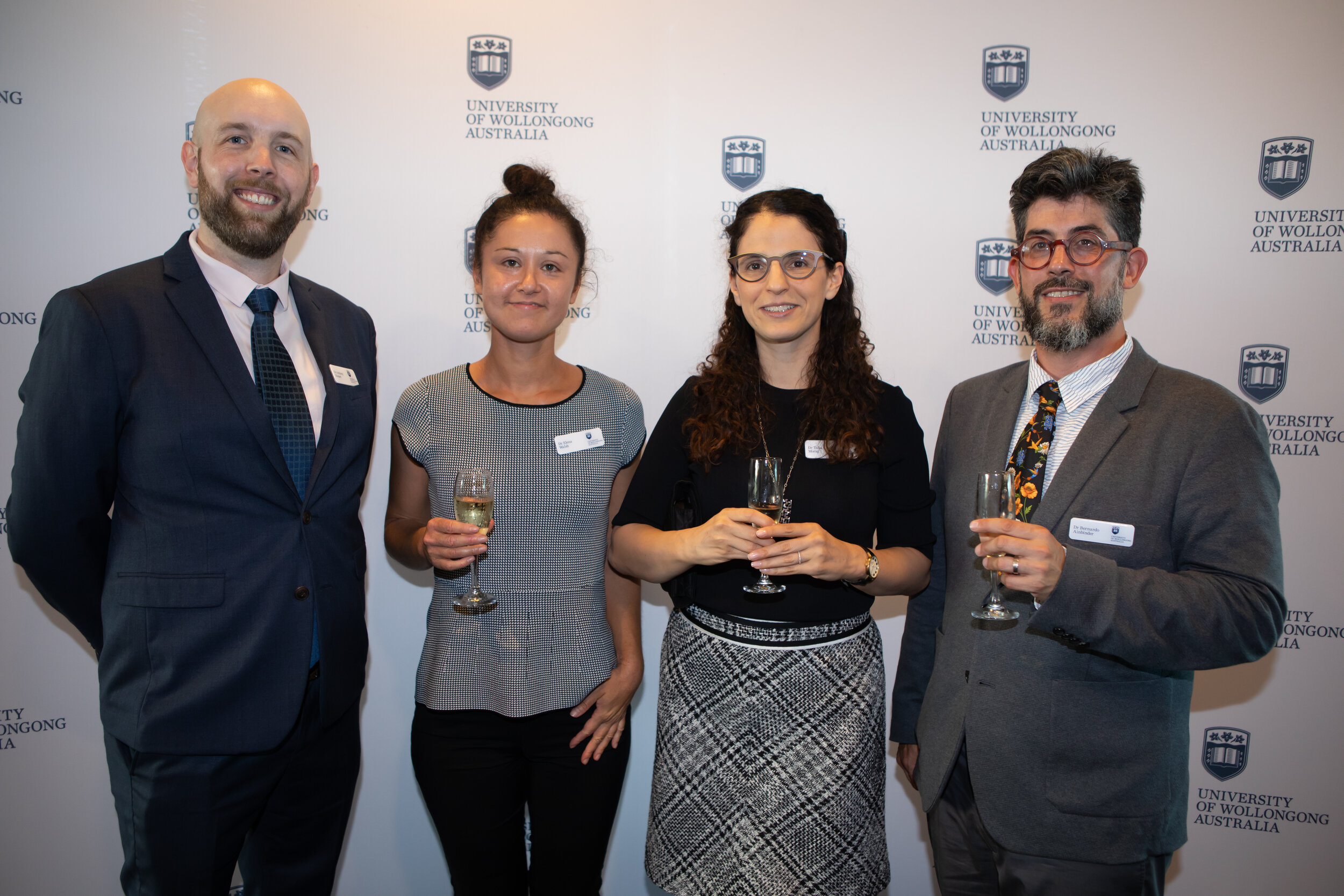
Left: With my brilliant colleagues, Anthony Hooper, Talia Morag, and Bernardo Ainbinder (left to right).